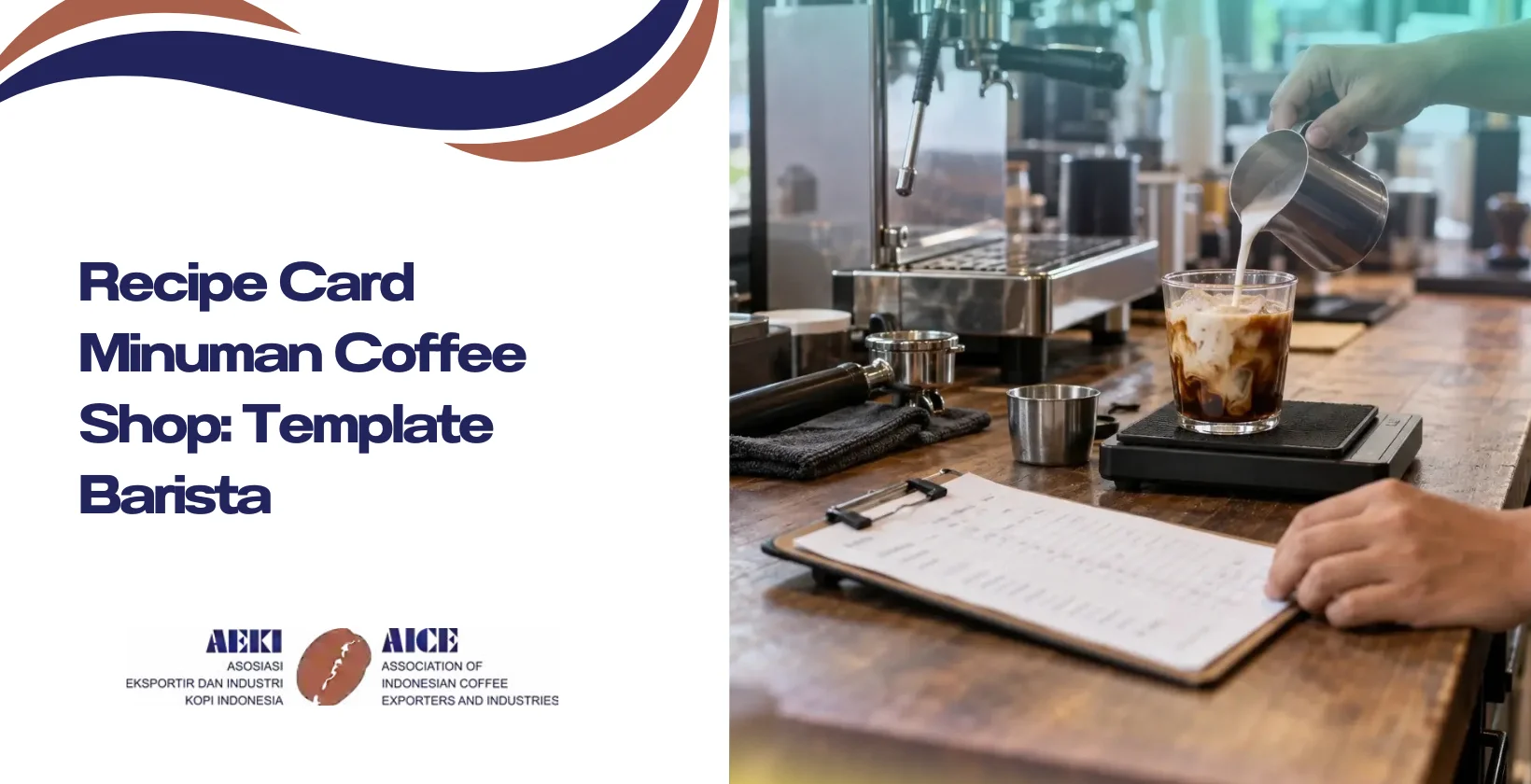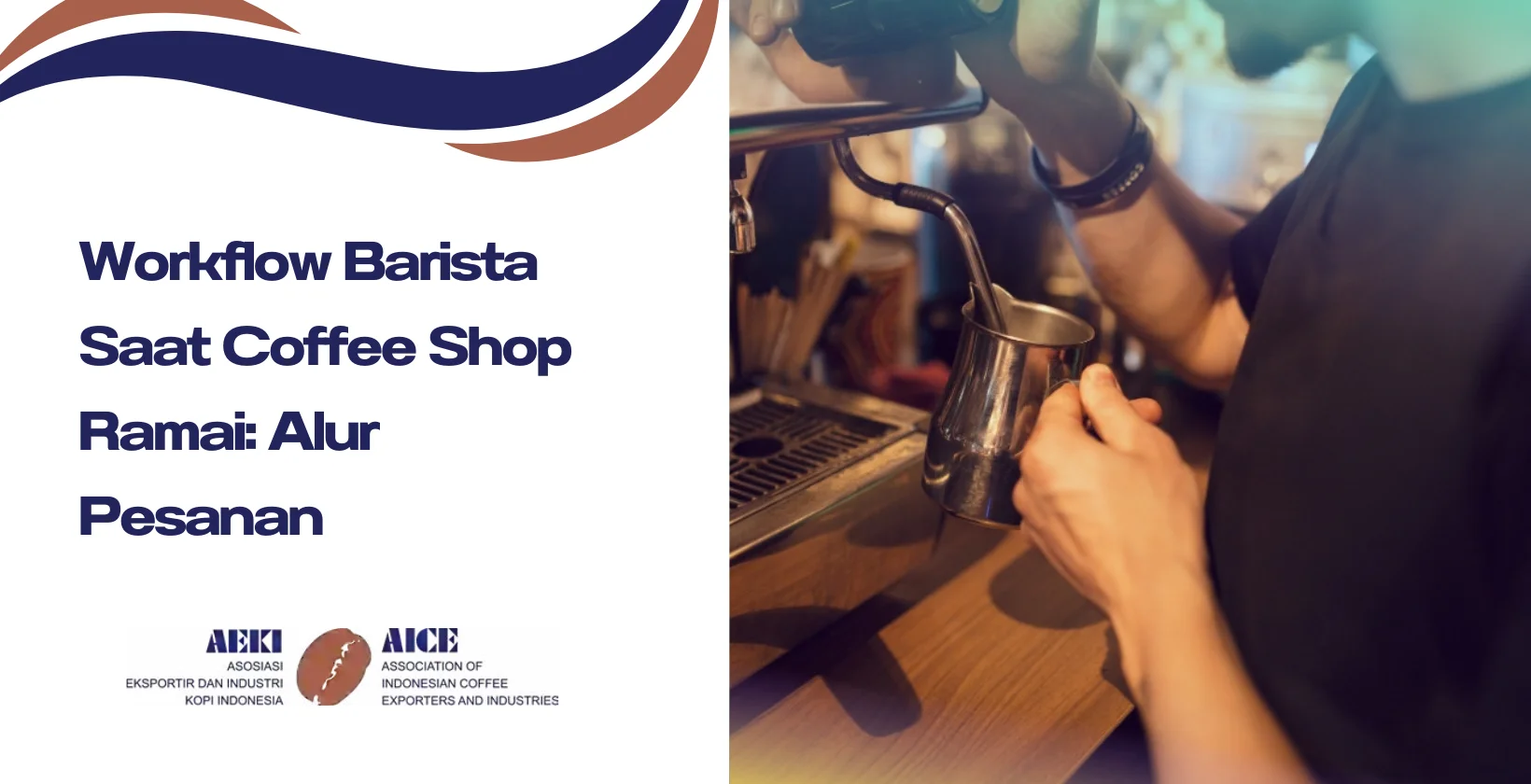


A barista's workflow during a busy coffee shop requires maintaining a clear, visible sequence: ticket received, details confirmed, drink prepared, results checked, then order submitted and marked complete. This flow allows the barista to work on all possible steps simultaneously without losing the first ticket or misreading the modification.
Assigning roles helps, but it must be tailored to the number of staff and the menu. Below is a flowchart, an example of task assignment, and a simulation of four orders arriving close together.
Barista workflow: map the flow from ticket to drink delivery
Start with the ticket, not the easiest drink to make. Each ticket should indicate the order number or name, quantity and type of drink, size, hot or cold, milk choice, modifications, and delivery location. If the writing is illegible or changes are only communicated verbally, the cashier and bar staff must verify the information on the ticket before processing.
A traceable barista workflow has four operational states: waiting , brewing , holding for clarification , and delivered . “The drink is at the delivery table” doesn’t necessarily mean the customer has received it; the completed marker is placed once the order number or ID is matched.
For tickets containing multiple drinks, mark which ones are ready and do not call out a complete ticket when there is still one drink left unfinished.

Grouping similar tasks can be helpful, such as preparing cups while the machine performs a step that doesn't require handling. However, don't hold up finished espresso just to wait for all tickets to be processed in one batch. The production order may differ from the arrival order when jobs are running in parallel; the handover order must still be clear to both the customer and the cashier.
Station preparation before the surge in orders
During service, check that cups and lids match the menu, that clean pitchers are available, that milk is adequate, that steam wand cloths are separate, and that finished drinks are not mixed with those still being brewed. Also, ensure the recipe used has been calibrated before the surge. Speculatively changing brewing parameters mid-queue can lead to inconsistent results between cups.
When an item runs out, the cashier must be aware of the affected menu items before accepting new orders. Do not move a cup marked "modified" to an unmarked area.
Provide a permanent location for tickets to be held , separate from tickets ready for creation . This can be a column on the POS screen or a physical location agreed upon by the team.
Division of tasks for one and two baristas
One barista: read the entire ticket, determine the order, work on drinks one at a time or in small batches that don't compromise results, then check and hand them out. If the same person is also handling the cash register, stop at a safe point before taking the next order. Don't rely on memory when switching from the cashier screen to the machine.
Two baristas: Assign an owner to each stage before the line gets long. A reasonable example would be barista A reading the ticket and making the espresso, while barista B prepares the milk/cold drink components, matches the finished drink to the ticket, and serves it.
If B is handling a special request, A does not automatically take over without stating the ticket status; if there is a separate cashier, the cashier is still responsible for clarifying the customer's record.
| Stage | One barista | Two baristas, example of division |
|---|---|---|
| Read and sort tickets | Barista reads, marks status | A reads; A and B agree on priorities |
| Espresso production | Barista works and monitors | A holding espresso station |
| Milk, cold drinks and rafts | Baristas move in a safe order | B holds this stage according to the ticket |
| Verification and submission | Barista matches number, fills, modifies | B final check; A provides information if there are any changes |
La Marzocco's workflow guide also provides an example of clearly defined positions when a second staff member joins. This is an example of a division of functions, not a rule that every shop must use the same staff. If there's only one steam wand or if space is limited, don't force two staff members to work on tasks that hinder each other.
How to mark modifications and pending orders
Write any modifications on the same ticket as the drink: "ice," "no sugar," "oat milk," or other requests. Use a non-mistaken marker on the glass before you begin mixing. Repeat critical notes when changing tasks, such as "ticket 03, oat, awaiting confirmation of milk allergy." Don't hand over a glass just because the color or size seems appropriate.
A request for plant-based milk doesn't automatically mean the product is safe for people with milk allergies. If a customer mentions an allergy, confirm the need and follow local allergen handling procedures, including equipment and materials used. If safety cannot be guaranteed, don't promise "allergen-free."
As a reference for communication practices, the Food Standards Agency's allergen guidelines recommend written information supported by conversation and attention to cross-contact. This UK guide is not a substitute for Indonesian regulations.
For tickets on hold, include the reason, the person who contacted the cashier, and the status of the hold. Other orders may be processed as long as they don't disregard the pending ticket or compromise food safety. Once a response is received, update the ticket and read the modifications back to the staff who will be making the drinks.
Simulation of multiple orders arriving close together
Imagine one espresso machine, one steam wand, one cashier, and two baristas. The following tickets are entered sequentially. This is a practice example , not a record of a real shop's performance.
| Entrance ticket | Order | Actions on queue |
|---|---|---|
| 01 | Hot latte, plain milk | A makes espresso; B prepares milk and a glass marked 01. After assembly, B checks and hands over. |
| 02 | Iced Americano, no sugar | B prepares the glasses and ice. A supplies the espresso when the station is ready. Match the numbers before handover; 02 can be finished while 01 is still being assembled if it's safe. |
| 03 | Oat latte, customer mentions milk allergy | Tantai detainedThe cashier confirms the need and the team checks the ability to prevent cross-contact. Don't initiate or promise safety until it's clear. |
| 04 | Two espressos | B marks two cups as one ticket; A does it when the machine is available. Do not mark completed until both are verified. |
Note two things. First, ticket 02 can be submitted before ticket 01 if both are processed in parallel and the numbers are called correctly; the team must not secretly forget ticket 01. Second, ticket 03 remains visible in the queue even if ticket 04 is processed first.
If an allergy request cannot be safely fulfilled, the cashier must convey the correct choice to the customer according to policy, then clearly close the ticket status.
Repeat the simulation with one barista, then two. Note any bottlenecks: is it A waiting for B, the cups aren't labeled, the cashier's information is late, or the equipment needs to be cleaned before switching milk types? These real-life problems are more valuable to fix than simply asking the team to "work faster."
Evaluation after simulation
Assess ticket accuracy , not just the number of drinks served. Record the receipt and delivery times for each ticket if the system allows; account for incorrect modifications, tickets that need to be reissued, reasons for orders being held, and delays due to specific stations. Compare results across multiple practice sessions with similar menus and staff numbers before concluding improvements.
Also ask: who owns the final check, does the cashier know ticket 03 is being held, and do both baristas agree on when the work can be transferred? The SCA Café Diploma scope places workflow, along with coffee preparation and quality consistency, within the cafe's service competencies. Speed without accuracy and communication is not the goal of the training.
Once the bottleneck is identified, determine which skills need to be retested—ticket reading, working the espresso station, handling milk, or handing out orders. For targeted practice, check out AEKI's barista training options and coffee training programs . If the issue relates to area readiness at the beginning or end of the shift, use the barista opening and closing SOPs as separate guidelines.
Conclusion
A good barista workflow ensures that the status of each ticket is visible, staff roles are clear, and drinks are checked before being served. Start with a flow that everyone can follow, test it on a mock queue, and then fix any real bottlenecks. More coffee articles are available at AEKI-AICE.
FAQ
1. What is meant by barista workflow during busy service?
A barista's workflow is the sequence of tasks, from receiving a ticket, confirming its details, making the drink, checking the results, and handing it out. During busy times, the ticket status and the person responsible for each step must remain visible.
2. Do orders always have to be made in ticket order?
The order of entry is the reference point. Production stages can run parallel, so simple drinks are sometimes finished sooner, but early tickets should not be lost or delayed without a clear reason. The number and delivery status must be accurate.
3. How are tasks divided if there is only one barista?
Use the ticket as a reminder, work in safe steps, and mark the status of each order. If you're also handling the cashier, stop the machine at a safe point before moving on.
4. Who checks the drinks when there are two baristas?
Designate one person responsible for final checking each ticket before service begins. In this example, officer B does this, but the actual distribution can be adjusted based on the station's competence and capacity.
5. What to do if the modification request is unclear?
Mark the ticket as held, ask the cashier to confirm, and then update the written record before production. When it comes to allergies, follow food safety procedures and don't claim a drink is safe without confirmation.