
Indonesian Coffee Training Center (PPKI) · AEKI-AICE
Roasting once with delicious results is luck. Roasting ten times with the same results is skill, and that's what this class teaches.
Nearest Batch
Each batch of coffee roasting training is open with limited capacity, as the number of roasting opportunities per participant is calculated from the start. The details below apply to the currently open batch.
Participant Suitability
This coffee roasting training doesn't require any roasting experience. A willingness to take careful notes and taste the coffee is helpful, as these two skills are used throughout the class.
You want to get into the production side and need to understand the machines before being trusted to run them yourself.
Your product is running, but the taste changes between batches and you don't yet know where the cause lies.
Some people operate the same machine differently. Classes equate terms and procedures.
Learning outcomes
The following four skills are assessed from participants' actual work during class, not from answers on paper.
Curriculum
The four modules are structured around learning objectives, not day-by-day allocation. The instructor confirms the time allocation for each module at the beginning of class, based on the abilities of the participants present.
Results Participants prepare the machine and ingredients before roasting without guidance.
Results Participants make decisions in the middle of the process, not just following a recipe.
Results The participant has sufficient records to repeat his best result.
Results Participants associated the taste in the cup with the decision on the machine.
Class Format
The pattern for each cycle is the same: observe, do, record, and taste. This is repeated several times so that participants can experience the effects of the changes they've made.
01
The teacher runs a batch while explaining each decision made and the reasons.
02
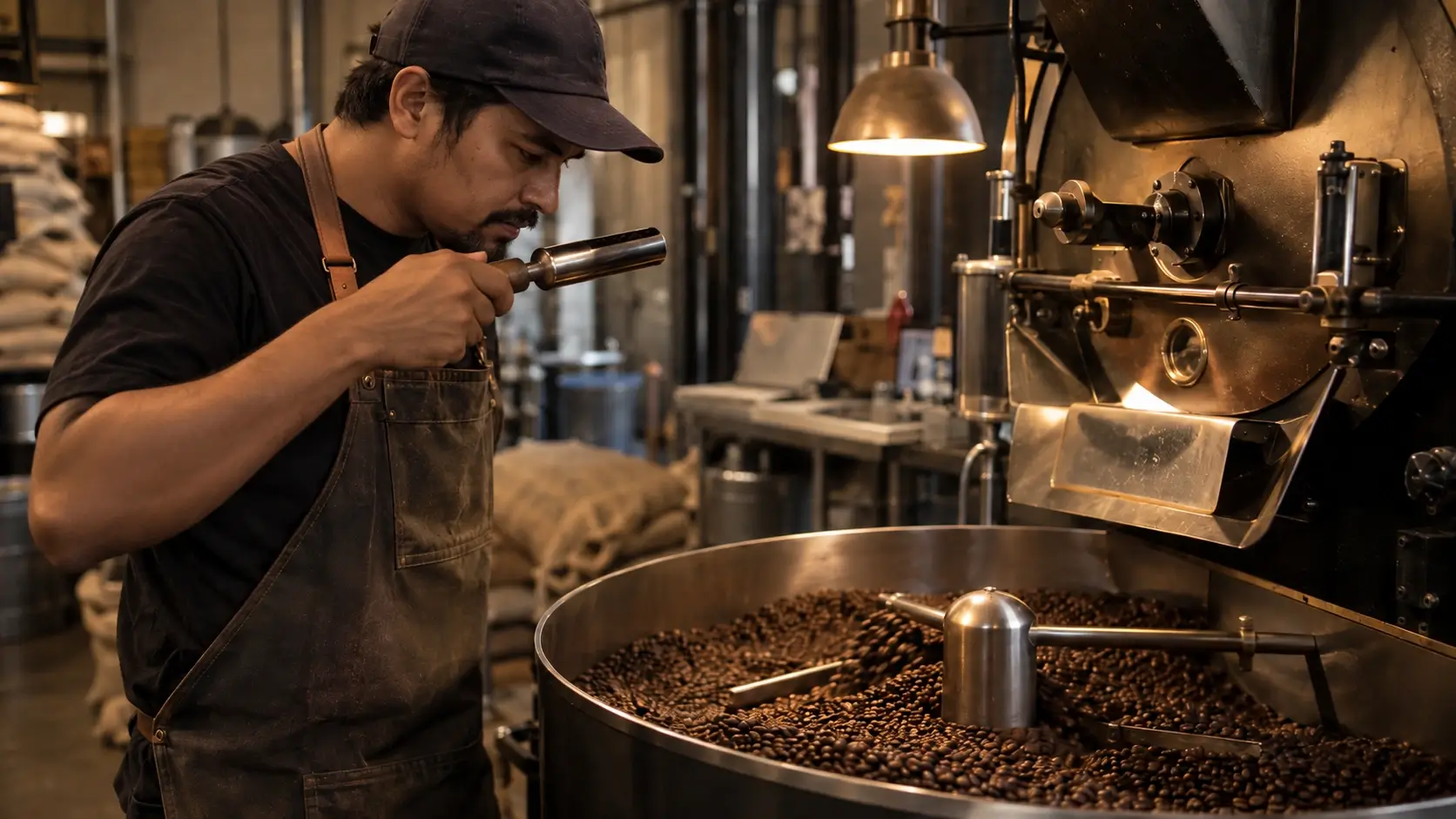
Participants operate their own machines. The number of roasting opportunities per person is confirmed by the operator on the day of the class.
03
Each batch is recorded on a roast log: temperature, time of each phase, exit point, and weight loss.
04
The results are tasted together, then the teacher points out one thing that needs to be improved in the next experiment.
Tools & Teachers
Classes are guided by practitioners who do roasting as a job, not teachers who read modules.
Class Documentation
Each batch the participants ran was recorded in a roast log: input weight, duration of each phase, first crack point, exit point, and weight loss. The two logs were then compared with the cups to determine which variables contributed to the flavor differences.
Participants took these notes home. They served as a starting point for developing their own profiles on their respective machines and rooms, not just as class documentation.
Operational Information
Coffee House, Room 408
Jl. RP Soeroso No. 20, RT.9/RW.5, Cikini, Menteng District, Central Jakarta City, DKI Jakarta 10330
Gondangdia and Cikini KRL stations are the closest drop-off points. The same building houses the AEKI-AICE Secretariat.
Assessment takes place throughout the class, not through a written exam. The instructor assesses three things: how well the participants operate the machine, the neatness of their roast log, and the accuracy of their reasoning when proposing batch improvements.
Feedback is provided immediately after each cycle, so participants can immediately try it on the next trial.
Certificate requirements for roasting classes are confirmed by the Secretariat during registration, as not all batches run on the same grading scheme.
If you need a certificate for a specific purpose, please mention this from the start so our team can ensure its availability in the batch you choose.
FAQ
No. The class begins with an introduction to raw materials and machinery, so even those who have never roasted before can still participate. Experienced participants often use the class to streamline their record-keeping and improve consistency between batches.
Not necessary. The PPKI will provide a roasting machine and recording equipment during the class. Having your own machine is not a requirement for participation, although participants who do have one are usually quicker to implement the class's findings on-site.
The machine brand, type, and capacity are listed in the facilities table on this page. If this field is empty, the Secretariat can provide it directly before you register, including the recording device used during class.
Both. All participants participate in the instructor's demonstration, while the roasting session is conducted in turns to ensure everyone has actual hands-on experience with the machine. The number of opportunities per participant is confirmed by the operator on the day of the class, depending on the number of machines and participants present.
Yes. Participants complete a roast log for each batch they run and then compare it to other batches to identify variables that differentiate the results. These logs are then taken home as the basis for developing profiles at their respective workplaces.
Provided. Green beans for practice are included in the class fee. Participants who wish to roast their own samples may bring them, but please confirm the quantity with the Secretariat in advance to ensure sufficient machine availability.
It's just a matter of principle. The class teaches the operation and evaluation of the roasting process, so participants understand the fundamentals that apply to any scale. Applying it to specific production volumes still requires adjustments to the machinery and ingredients you use.
Program Consultation
Please state two things: your current roasting experience and what results you hope to achieve after the class. The PPKI team will tailor the practical emphasis based on this.
Want to compare with other paths first? Visit the all coffee training programs page , or continue to the in-depth coffee sensory evaluation after mastering the roasting process.