

Indonesian Coffee Training Center (PPKI) · AEKI-AICE
This isn't a demonstration class. This Jakarta barista training is a hands-on barista class: from the very first session, you'll stand in front of the machine, pull your own shots, and then make corrections on the spot until the results are consistent. This Jakarta barista course starts from scratch, with no experience required.
Nearest Batch
One batch of Jakarta barista training is open, with limited capacity to ensure each participant has sufficient machine time. The details below apply to the currently open batch.
Participant Suitability
Barista classes start from scratch. There are no entrance exams or experience requirements. All you need is a willingness to stand in front of the machine for the entire session.
Still not convinced barista is the right path? This guide to becoming a professional barista outlines the steps, from your first class to being trusted to handle your own bar.
You've never touched an espresso machine before. The class starts with how to hold a portafilter, not with lanmillionn theory.
The bar team is self-taught, so everyone's results vary. The class adheres to the same standards.
You will be hiring baristas and need to know what standards are appropriate to expect from them.
Learning outcomes
All of the points below are directly observable. They're not claims, but rather what the instructor observed and corrected during the session.
Curriculum
Four modules, each with practical activities and measurable outcomes at the end of the session. The order and timeframe will be confirmed by the instructor on the first day.
Results Participants can explain the reasons behind the taste that appears in the cup.
Results Participants were able to correct errant shots without guidance.
Participants' results produced a milk texture that was suitable for serving and a legible base pattern.
Results Participants carried out one simulation shift following the barista opening and closing SOP.
Teachers & Tools
Classes are led by baristas who are still actively working, not teachers who read modules. The tools used are the tools the shop actually uses.
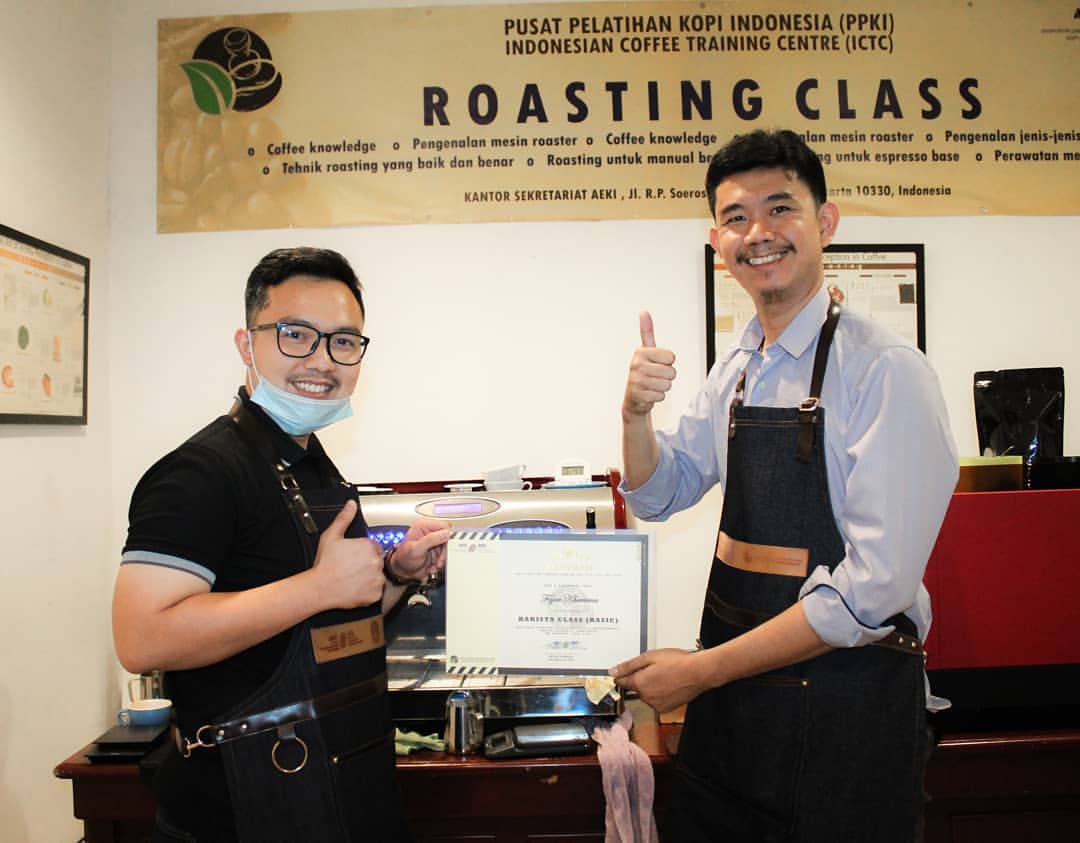
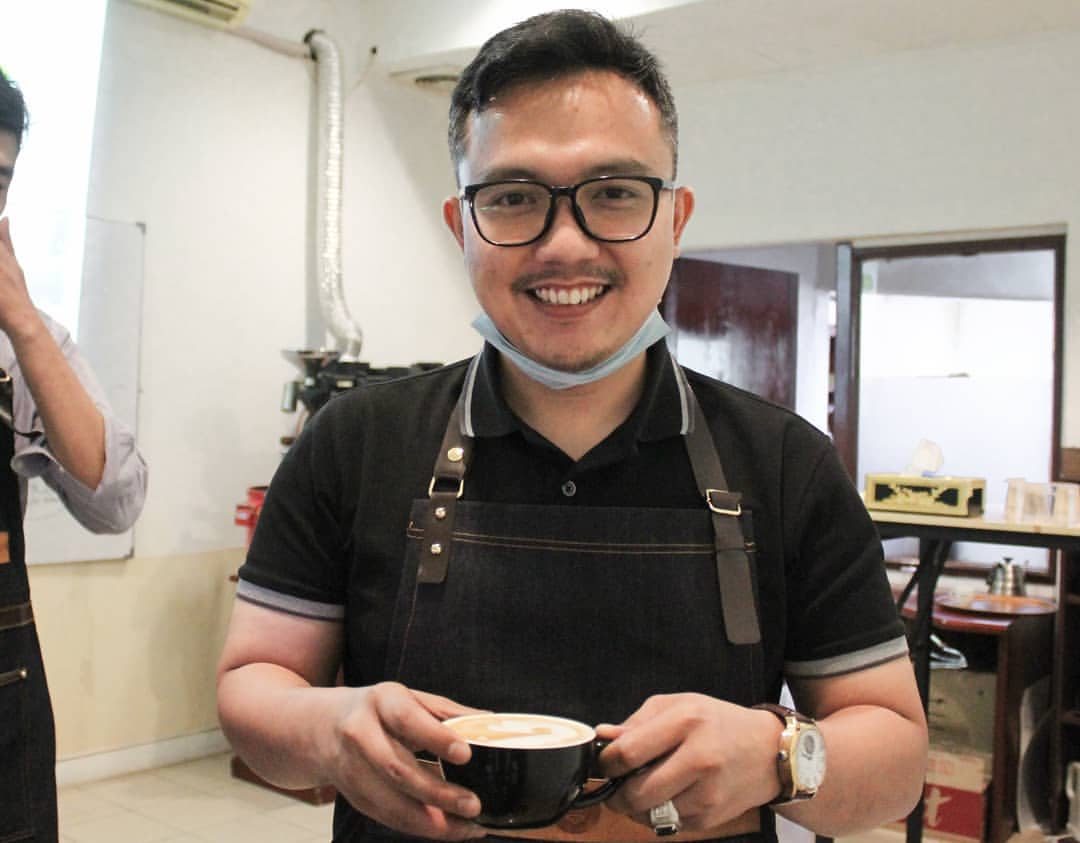
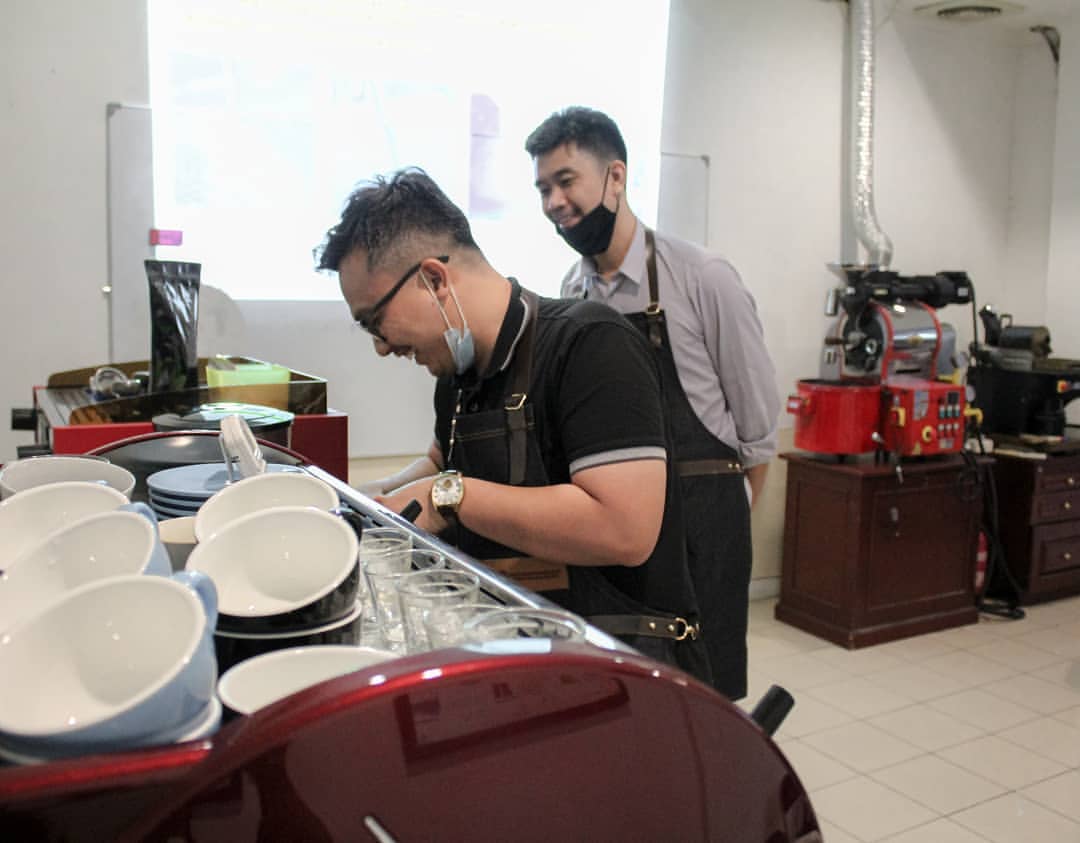
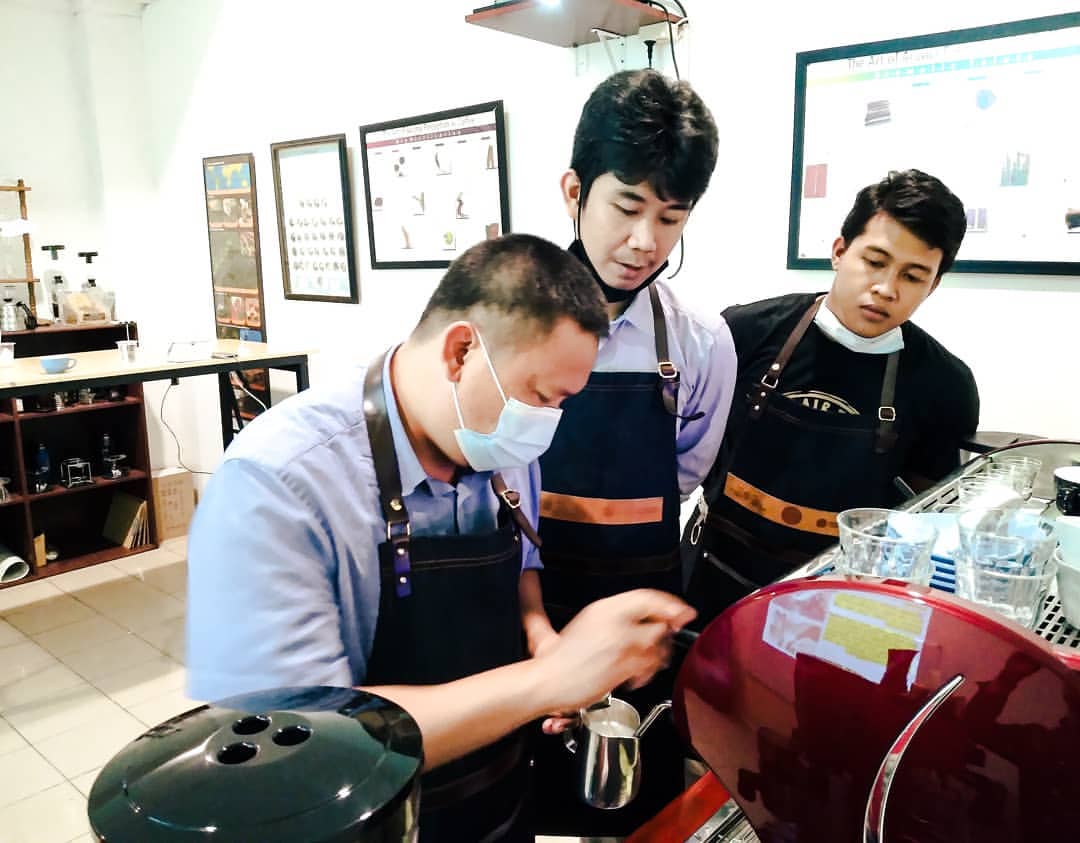
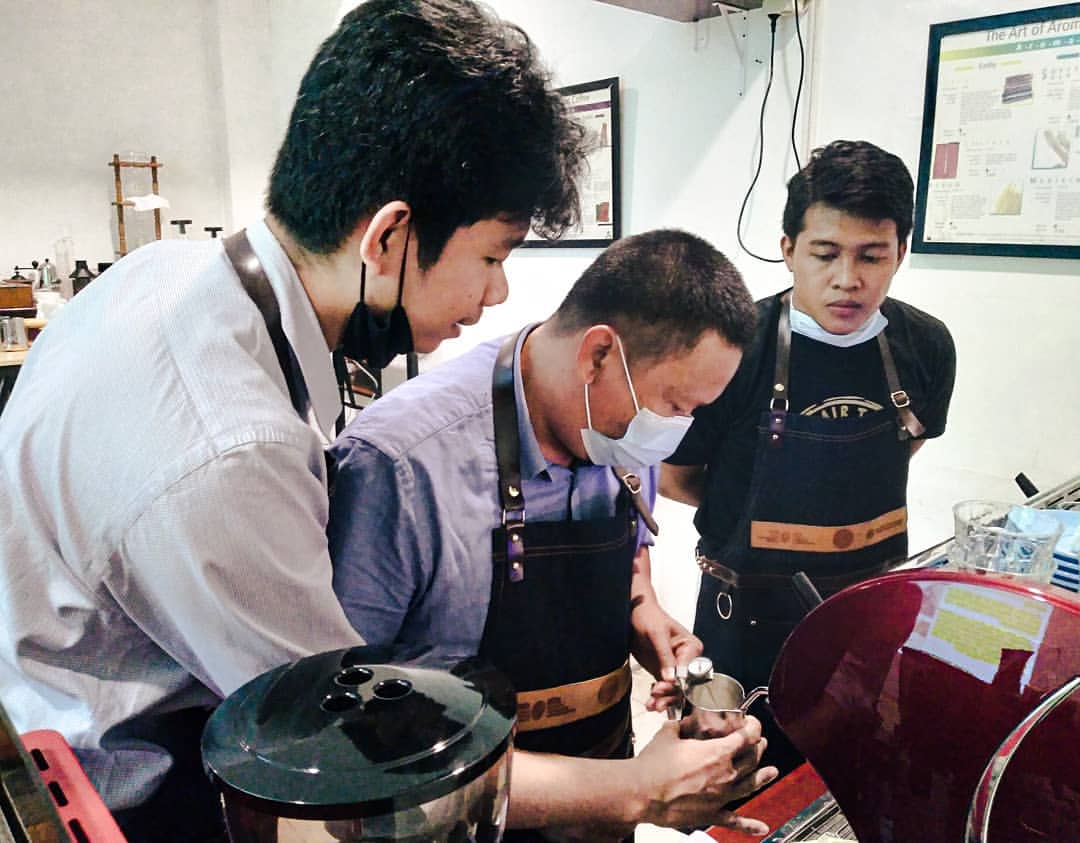
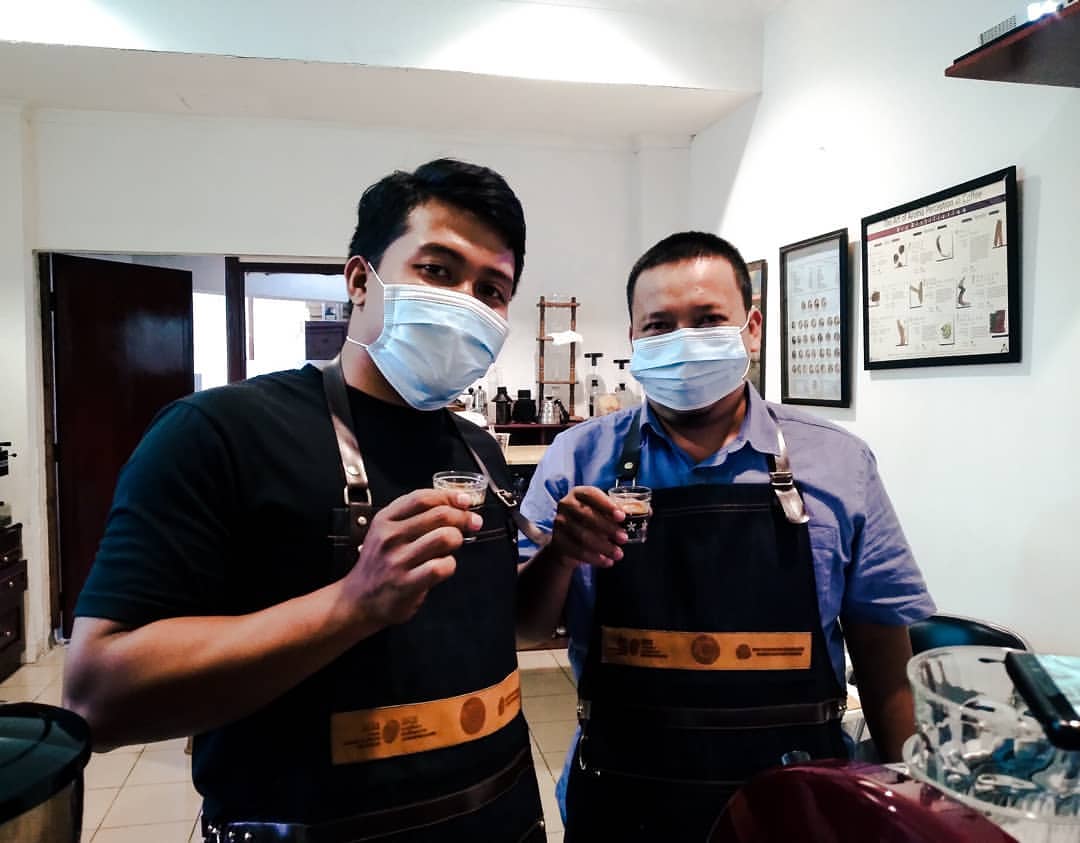
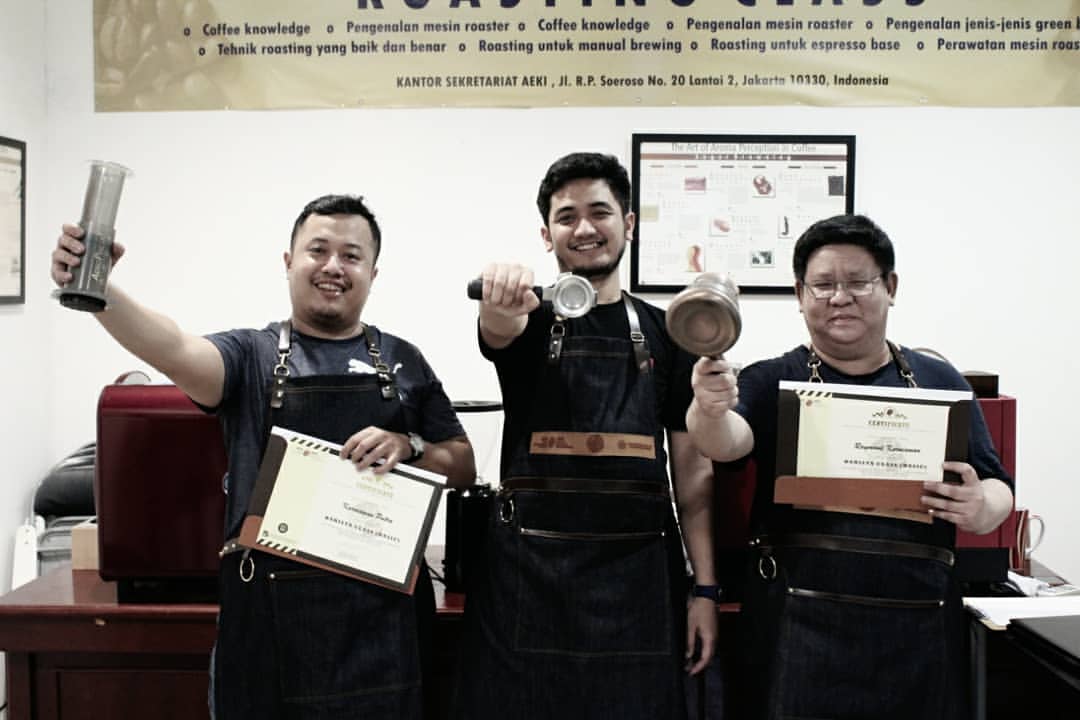
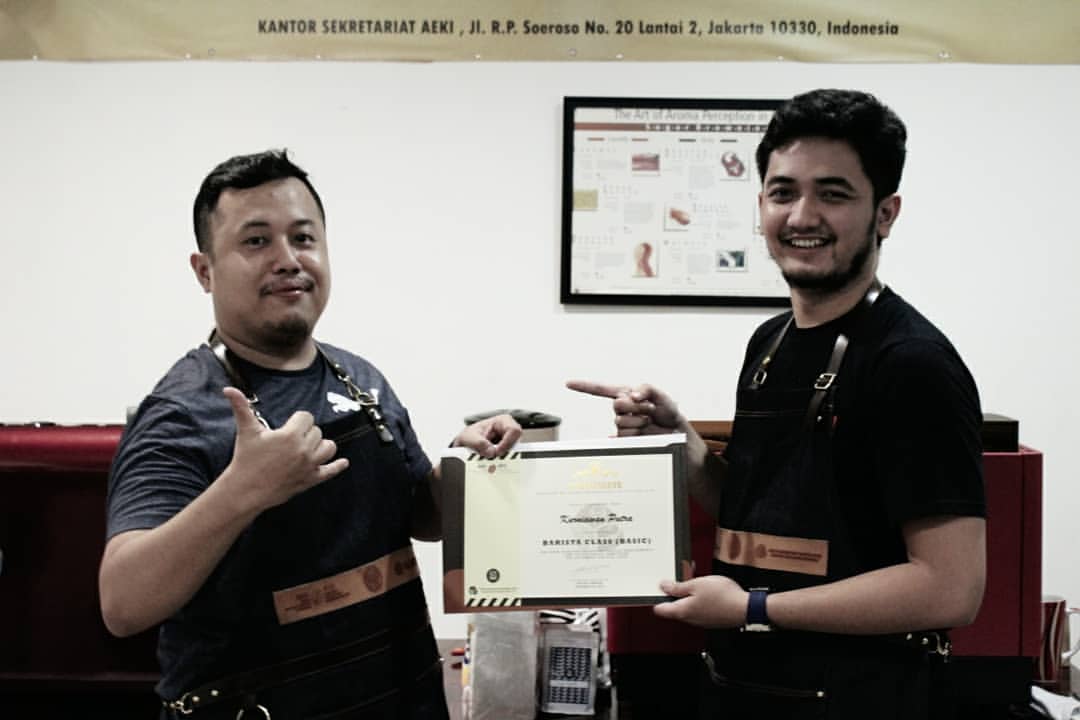
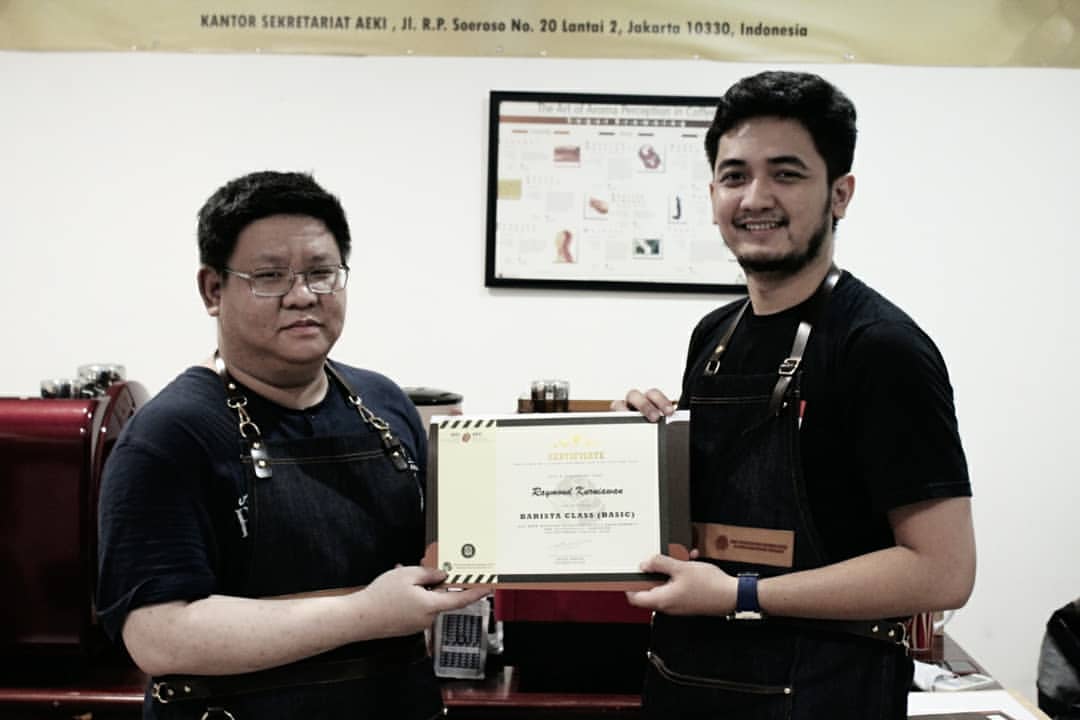
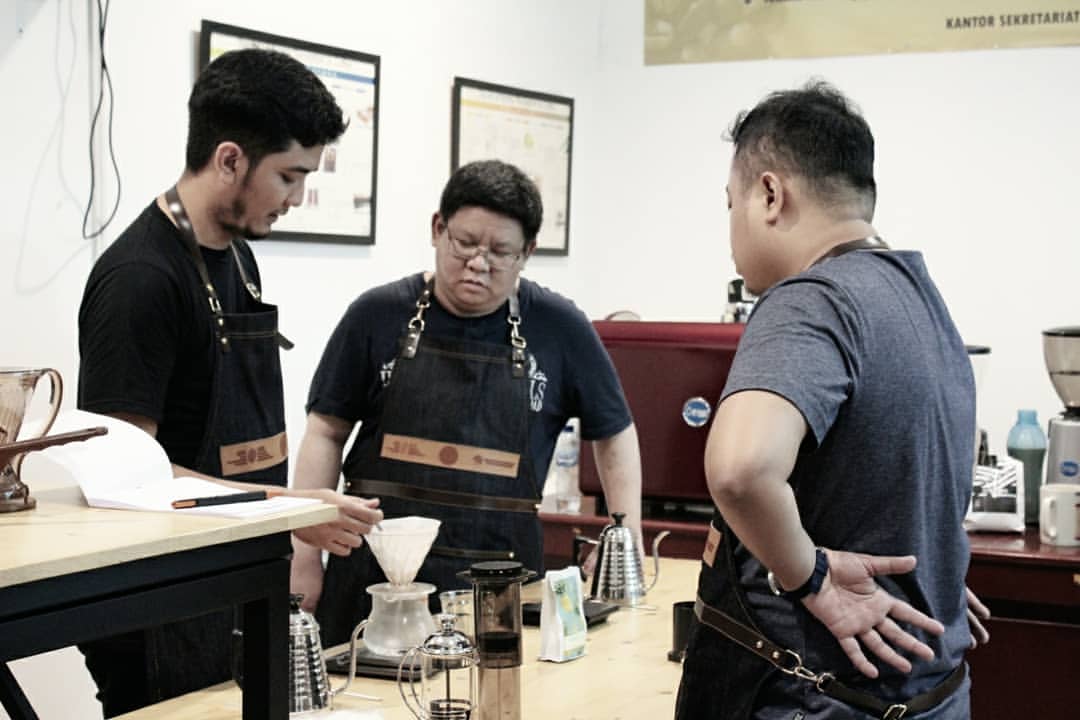
PPKI AEKI-AICE barista training documentation archive, 2020–2021. Tap the photo to view the full size.
Venues
The class will take place at Gedung Kopi, Cikini, Central Jakarta. The full address and room number are listed below and will be sent back with the registration confirmation.
Coffee House, Room 408
Jl. RP Soeroso No. 20, RT.9/RW.5, Cikini, Menteng District, Central Jakarta City, DKI Jakarta 10330
The same building serves as the AEKI-AICE Secretariat office, so registration and classes take place at one address.
The location is in the Cikini area of Menteng, near Taman Ismail Marzuki. Gondangdia and Cikini KRL Stations are the closest drop-off points for train passengers.
Parking availability depends on building capacity on the day of class. Consult the Secretariat if you are bringing a private vehicle.
Rating
Certificates aren't automatically distributed to all participants. They're awarded after a competency test, ensuring their value remains high in the eyes of employers.
AEKI-AICE issues competency certificates through the Indonesian Coffee Training Center, with the participant's name and the batch they participated in.
Participants attended all practical sessions and passed the closing competency test which was assessed directly by the instructor.
Assessment is based on actual work (espresso, milk texture, and workflow), not a written exam.
FAQ
Yes. The class is designed from scratch and doesn't require any coffee shop experience. Participants who have never touched an espresso machine are the primary target group for this program.
The training lasts three days, with 6 to 8 hours of study time per day. The next batch begins on October 26, 2026. Exact start times will be sent with registration confirmation.
The fee covers all practical sessions with the instructor, use of bar machines and equipment, coffee beans and milk used during the training, and a final competency test with a certificate for participants who pass.
The class takes place at Gedung Kopi, Room 408, Jl. RP Soeroso No. 20, Cikini, Menteng, Central Jakarta 10330. This address will be resend with the registration confirmation.
No need. All machines, grinders, and bar equipment are provided by PPKI. Just bring yourself and comfortable clothing for standing. Aprons are provided on site.
Competency certificates are issued by AEKI-AICE through the Indonesian Coffee Training Center, and are only given to participants who attend all sessions and pass the closing competency test.
Please inform the Secretariat before the batch begins. Your seat may be transferred to the next batch depending on availability. Refunds are subject to the Refund Policy.
Nearest Batch Registration
Please specify the batch you're targeting and the number of participants. The PPKI admin will confirm remaining seats, applicable fees, and registration steps on the same day.
Not ready for a full class? Try the two-hour espresso and latte art workshop first, or compare the full learning paths on the coffee training programs page.