
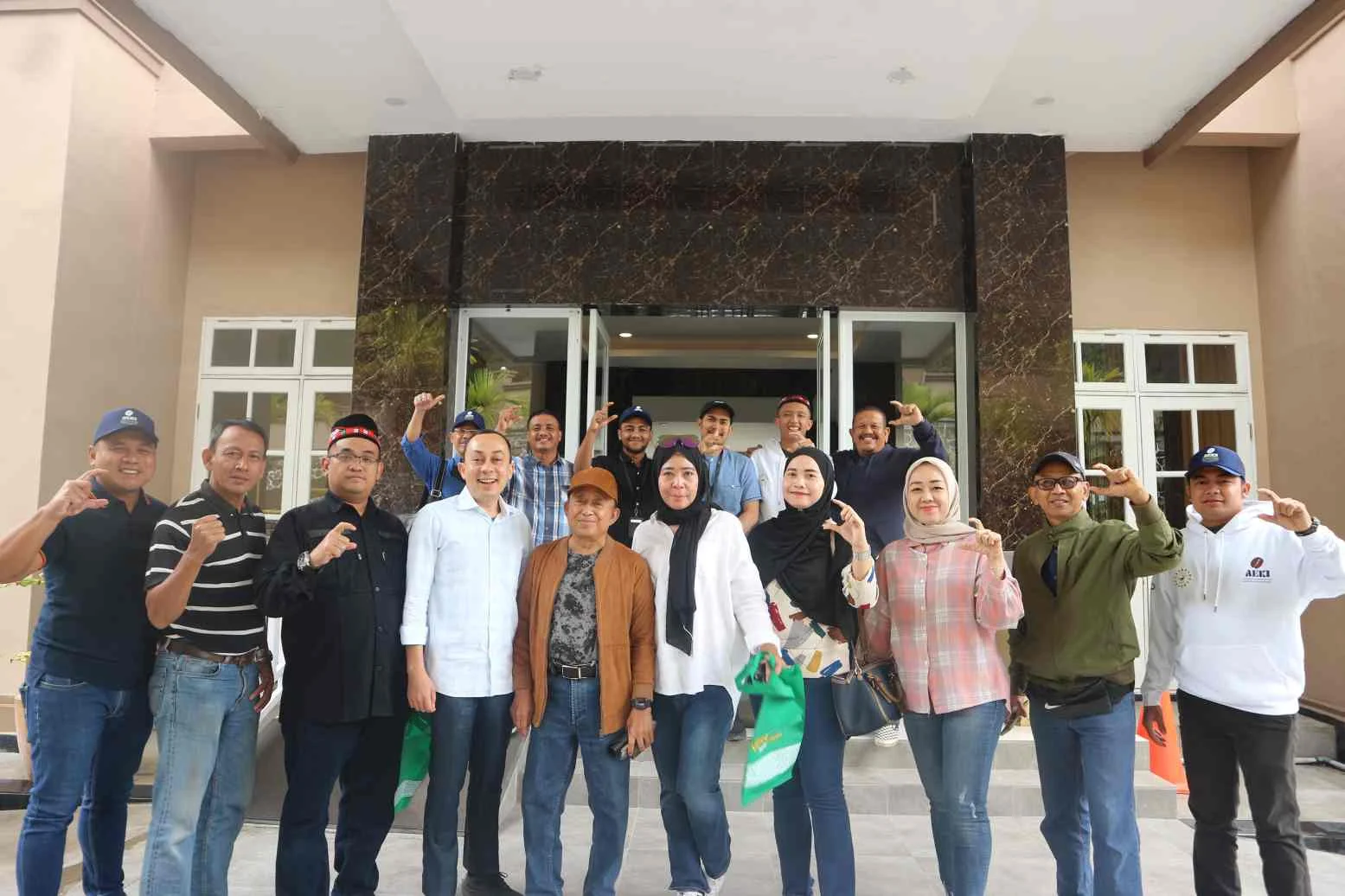
Documentation of AEKI-AICE activities

AEKI-AICE · Organizational Work Program

Work Program of the Indonesian Coffee Exporters and Industry Association

What AEKI does, for whom, and how coffee players can participate: eight work directions of the central and regional administrators on one page.

8Direction of work program
4Annual agenda
5 classesRegular professional training
BPP & BPDProgram implementer

Work Program Overview

What is the AEKI Work Program?

The AEKI work program consists of eight areas of work implemented by the Central Executive Board (BPP) and Regional Executive Boards (BPD) of the Indonesian Coffee Exporters and Industry Association. These include organizational strengthening, coffee education, regular activities, member services, statistical data, social programs for farmers, commodity markets, and digital information channels.

This page specifically discusses the program: its activities, who benefits, and the pathways to participation. A profile and history of the organization are available on the AEKI About page.

Summary of AEKI's eight work programs, types of activities, and beneficiaries
No. Programme Form of activity Beneficiaries
01Organizational strengtheningEncourage the active role of BPP and BPDCentral and regional administrators
02Coffee educationIndonesian Coffee Training Center (PPKI)Aspiring coffee entrepreneur
03Regular activities and trainingSymposium, export training, professional training, entrepreneurship workshopCoffee players
04Member servicesMarket information, regulatory updates, aspiration channelsExporters and member industries of AEKI
05Coffee statistics dataStatistical compilation partnerships with international research partnersGeneral public
06Farmer social programFarmers Training and social assistanceIndonesian coffee farmers
07Coffee commodity marketAlternative financing sources and hedging instrumentsCoffee players in the distribution channel
08Digital informationAEKI website and social mediaMembers and the public

Slide the table sideways to see all columns.

Program Details

AEKI's Eight Work Programs

The order below follows the official organization's work program. Each program lists the work done and the relevant page, if available.

01Organization

Strengthening the Role of Central and Regional Administrators

The first program targets the management itself. Every member of the BPP and BPD is expected to be directly involved in the national coffee agenda, not simply be listed on the management board. The motto used for this direction is: Unite, Work, and Create.

This program served as the foundation for the next seven programs. Outside of Jakarta, the Regional Development Bank (BPD) is the closest extension of the organization to coffee farmers in its region.

02Education

Coffee Education for Independent Entrepreneurs

Among the eight programs, education is prioritized. The goal is to develop self-sufficient coffee entrepreneurs, and the implementing agency is the Indonesian Coffee Training Center (PPKI).

The materials, schedule, and costs for each class are discussed on the respective training pages, not repeated here.

03Activity

Regular Activities, Training, and Competition Events

The third program organizes the organization's calendar: recurring forums, classes, workshops, and seminars, including a space for coffee practitioners to compete. Its four annual agendas are:

  • AEKI National Coffee Symposium
  • Coffee Export Training
  • Regular coffee profession training: Roasting, Barista, Cupping, Latte Art, and Manual Brewing
  • Coffee entrepreneurship workshop
04Member

Services and Benefits for Members

This is the only program with benefits exclusively for members. Registered exporters and industry players receive market information, updates on changes to export regulations, basic export procedure guidance from the Secretariat, and a channel to convey their concerns to the government.

Details of the benefits per membership package and their costs are listed on the membership package page.

05Date

Coffee Statistics Data for the Public

AEKI collaborates with international research partners and data providers to compile coffee statistics that are open to the public, not limited to members.

The compiled figures can serve as a shared reference for business actors, researchers, and policy makers when discussing Indonesian coffee production and trade.

06Farmer

Social Program for Coffee Farmers

The sixth program reaches out to non-members, namely coffee farmers. Through its corporate social responsibility (CSR) scheme, AEKI runs Farmers Training to increase farmers' knowledge, along with social assistance to support their well-being.

The quality of exported beans is determined at the farmer level during harvest and post-harvest. Therefore, education upstream directly impacts compliance with coffee quality standards downstream.

07Happen

Coffee Commodity Market and Hedging

Coffee traders and distributors face two common challenges: insufficient capital to maintain inventory and volatile prices. The seventh program addresses both. Together with several partners, AEKI is promoting the establishment of a Coffee Commodity Market as an alternative financing source to ensure a stable supply.

In the same market, hedging instruments are prepared to reduce the risk of price fluctuations and help establish reference prices.

08Information

Digital Information and Education Channel

The latest program shifted much of the organization's communications to digital channels. AEKI's website and social media platforms are being used to quickly disseminate information and educational materials to members and the public, eliminating the need for face-to-face meetings.

Program limits: None of these eight programs involve coffee trading or export permits. AEKI operates as an association.

Involvement

How to Join the AEKI Work Program

AEKI's work program is open to coffee entrepreneurs, regardless of their respective roles. Choose the path that best suits your needs.

01

Join as a Member

Membership opens access to the 04 program, the only program exclusively for members.

View membership packages
02

Participating in PPKI Training

The PPKI class is the entry point for programs 02 and 03, and is open to non-members.

View training programs
03

Connect with BPD

Outside Jakarta, the program is run through regional boards. Find the BPD nearest to your area.

View BPD network
04

Expressing Aspirations

New class proposals, data needs, or distribution constraints can be used as material for developing the next program.

Contact the Secretariat

FAQ

Questions about AEKI's Work Program

What are AEKI's work programs?

AEKI's work program consists of eight directions: strengthening the role of BPP and BPD, coffee education through PPKI, regular activities and training, member services, coffee statistics, social programs for farmers, development of the Coffee Commodity Market, and utilization of websites and social media for information and education.

Who runs AEKI's work program?

The work program is implemented by the Central Executive Board (BPP) in conjunction with the Regional Executive Boards (BPD). Coffee education is provided through the Indonesian Coffee Training Center (PPKI), while member services and information dissemination are coordinated by the AEKI Secretariat at the Coffee Building in Jakarta.

Which AEKI work programs are open to non-members?

For the most part, PPKI training, annual events like the National Coffee Symposium, coffee statistics, farmer social programs, and digital information channels are accessible without membership. Only member service programs benefit registered exporters and industry players.

What is the annual agenda in AEKI's work program?

There are four annual events: the AEKI National Coffee Symposium, Coffee Export Training, regular professional coffee training covering roasting, barista training, cupping, latte art, and manual brewing, and a coffee entrepreneurship workshop. The schedule for each event is announced by the AEKI Secretariat.

How do I propose input for AEKI's work program?

Feedback can be sent to the AEKI Secretariat via email at info@aeki-aice.org or WhatsApp at +62 812-7777-6474. Please specify the program in question, such as the need for new classes, specific statistics, or distribution channel constraints, so the proposal can be forwarded to the relevant administrators.

What is hedging in the coffee commodity market?

Hedging is a method of reducing the risk of price fluctuations by locking in a buying or selling price for a specific period, typically through a futures contract. Within the AEKI work program, this instrument is being developed as part of the Coffee Commodity Market to mitigate the risk of price fluctuations faced by coffee players in the distribution channel.

AEKI Secretariat

Have Questions about the Work Program?

Convey your needs to the AEKI Secretariat, whether related to membership, PPKI training schedules, or program collaboration opportunities.