
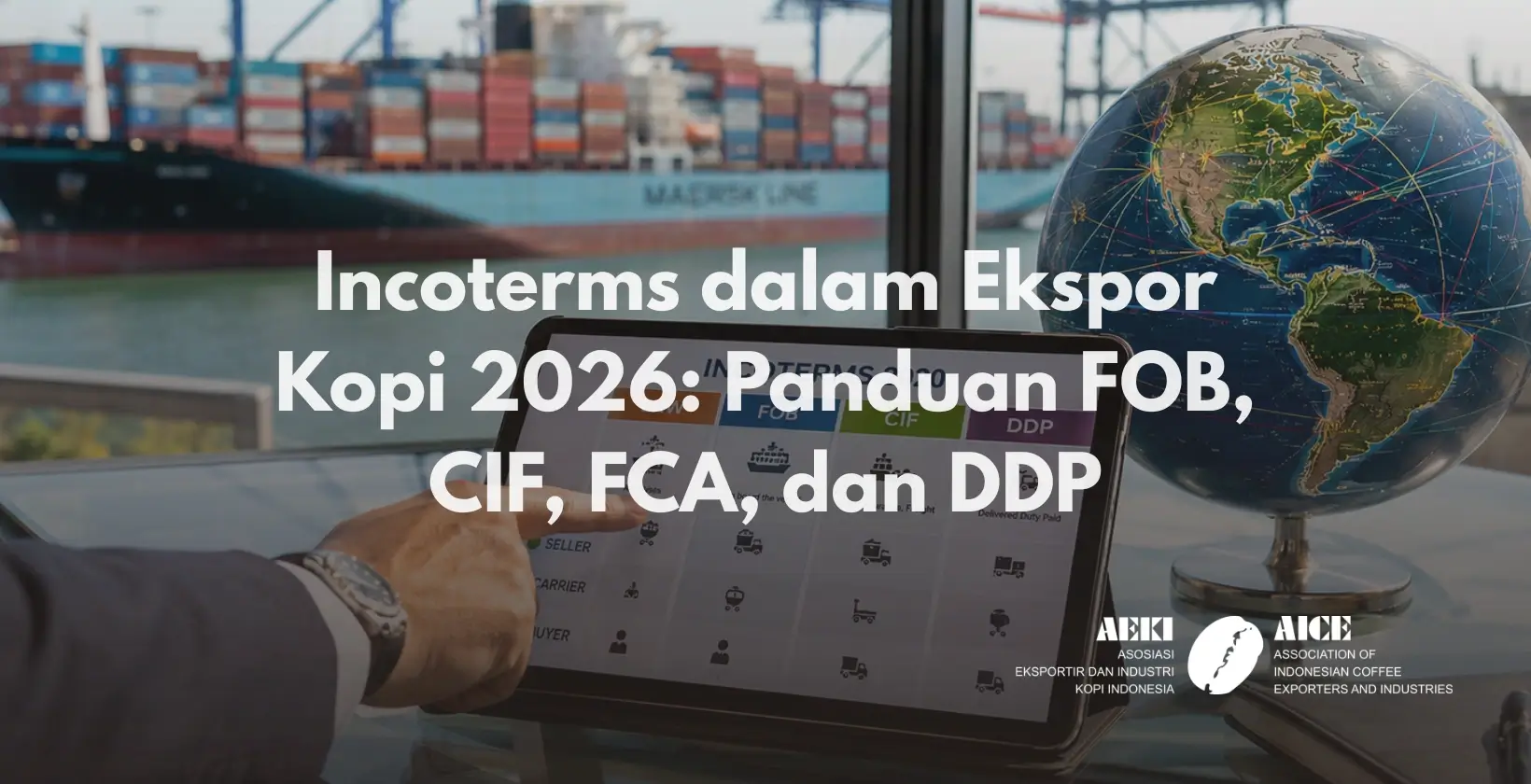


Incoterms are international trade rules that divide responsibilities, costs, and risks between sellers and buyers in a sales contract. For coffee exports in 2026, the latest official version listed by the International Chamber of Commerce (ICC) remains Incoterms® 2020 , which consists of 11 rules for various modes of transport.
In coffee transactions, the choice of rules determines practical matters such as who arranges transportation, who pays for freight, who handles export or import formalities, when risk of damage to the goods passes, and whether the seller is required to provide insurance. However, these rules do not replace the sales contract and do not govern all aspects of the transaction, such as payment methods, coffee quality specifications, transfer of ownership, or dispute resolution.
When deciding on a shipping scheme, focus your choices on the point of delivery, the mode of transportation, each party's ability to manage logistics, and the costs they actually want to include in the selling price.
What Are Incoterms in Coffee Exports?
Incoterms for coffee exports are standard rules that explain who does what, who pays certain costs, and when risk passes from seller to buyer. These rules are published by the International Chamber of Commerce (ICC) and are used in international trade contracts.
Practically, these trading rules help answer several important questions:
- Who transports the coffee from the warehouse to the delivery point?
- Who takes care of export and import formalities?
- Who orders the main freight?
- Who covers the freight?
- Is the seller required to provide insurance?
- At what point does the risk of loss or damage shift?
How Many Types of Incoterms Are There in 2020?
Incoterms® 2020 consists of 11 rules: seven can be used for various modes of transport and four are intended for maritime or inland waterway transport.
The seven rules for various modes of transport are EXW, FCA, CPT, CIP, DAP, DPU, and DDP . The four rules for sea or inland waterway transport are FAS, FOB, CFR, and CIF.
In the coffee trade, all of these rules don't need to be applied or memorized at once. What's more important is understanding the rules that apply to actual shipping patterns, particularly whether the coffee is shipped in containers, who designates the carrier, and where the seller actually delivers the goods.
Which Incoterms Are Relevant for Coffee Exports?
FOB, CIF, FCA, EXW, and DDP are often discussed in coffee transactions, but the best choice depends on the delivery point and logistics structure, not just the most familiar term.
1. FOB (Free On Board)
FOB means the seller delivers the goods once the coffee has been loaded onto the vessel at the agreed shipping port; at that point, risk passes to the buyer. The seller completes export formalities and handles the goods until they are on board, while the buyer arranges the main ocean freight.
Writing example:
FOB Belawan Port, Indonesia, Incoterms® 2020
FOB is appropriate when the transaction uses sea or inland waterway transportation and the seller can fulfill his obligations until the goods are on board the ship.
For a more detailed discussion, read the differences between FOB and CIF in coffee exports.
2. CIF (Cost, Insurance and Freight)
CIF means the seller pays the freight and provides insurance to the named port of destination, but risk passes once the goods are on board at the port of origin. This is one of the most misunderstood aspects of export transactions.
Example:
CIF Hamburg Port, Germany, Incoterms® 2020
With CIF, cost and risk don't shift at the same point . The seller still pays for freight and provides insurance coverage to the port of destination, but the risk of the journey passes to the buyer once the goods are on board.
Under the 2020 version of the CIF rules, the seller essentially provides the minimum level of insurance coverage as stipulated by the ICC, unless the seller and buyer agree to broader coverage. The ICC explains that CIF still uses the Institute Cargo Clauses (C) minimum basis, while CIP has different coverage requirements.
3. FCA (Free Carrier)
FCA means the seller delivers the coffee to the carrier or the buyer's designated party at an agreed-upon location, and risk passes at that point. FCA can be used for various modes of transport and is particularly relevant for container shipping.
This is important because green beans are often shipped in containers. If the seller delivers the container at the terminal before it is loaded onto the vessel, FCA can better reflect the physical flow of the shipment than FOB.
The ICC's guidance on FCA and FOB also indicates that FCA is suitable for containerized or multimodal shipments. The ICC even published specific guidance on the use of FCA and CPT for containers through ports.
Example:
FCA Container Terminal Tanjung Priok, Jakarta, Indonesia, Incoterms® 2020
4. EXW (Ex Works)
EXW places minimum obligations on the seller: the goods are provided at an agreed location, while most of the transport and formalities fall on the buyer.
This scheme may seem simple for the seller, but it can be impractical for export transactions if the buyer has difficulty handling formalities in the country of origin. In such circumstances, FCA is worth considering, as the seller can handle export formalities before handing over the goods to the carrier.
Therefore, do not choose EXW just because it appears to provide the least costs and obligations to the seller.
5. DDP (Delivered Duty Paid)
DDP places a significant burden on the seller as the goods are delivered at the destination after the seller has handled the transport and import formalities as well as any import duty or tax obligations as per its terms.
DDP can simplify the process for the recipient, but the exporter needs to ensure that the import obligations are legally and operationally feasible in the destination country.
Before agreeing to a DDP, check the customs, taxation, registration and party requirements that can perform importer functions in the destination country.
Differences between FOB, CIF, FCA, EXW, and DDP
The main differences between the five rules lie in the point of delivery, transfer of risk, primary transportation arrangements, insurance obligations, and import formalities.
| Rule | Risk point moves | Main transportation | Insurance is mandatory for the seller | Import formalities |
|---|---|---|---|---|
| EXW | When the goods are placed for the buyer at the agreed location | Buyer | No | Buyer |
| FCA | When handed over to the carrier/designated party at the agreed point | Generally buyers | No | Buyer |
| FOB | When the goods are on board at the port of origin | Buyer | No | Buyer |
| Tax ID No. | When the goods are on board at the port of origin | Seller pays up to the port of destination | Yes, according to CIF terms | Buyer |
| DDP | At the agreed destination, ready to be unloaded | Seller | Not automatically required by DDP | Seller |
This division follows the general character of ICC rules. The table should be used as a preliminary guide, not as a substitute for the official ICC text or sales contract. Terminal charges, handling, documentation, inspection, and additional services still need to be matched to the contract of carriage and the terms of the transaction.
FOB or CIF for Coffee Export?
Choose FOB if the buyer will control the primary sea freight; Choose CIF if the seller will arrange and pay for freight and provide insurance to the port of destination. However, for coffee in containers that is handed over to the carrier before on board, FCA evaluates it first.
As an illustration, an exporter sold 19,2 tons of green beans from Sumatra to a buyer in Germany.
If the contract is FOB Belawan Port , the seller handles the coffee until it is loaded onto the ship. Once the goods are on board, risk shifts to the buyer. The buyer then arranges the ocean freight and insurance requirements.
If the contract is CIF Hamburg Port , the seller pays the freight to Hamburg and provides the insurance required by CIF. However, risk transfers once the coffee is on board at the port of origin.
If the container is handed over by the exporter to the terminal or carrier before loading onto the vessel, the FCA at the clearly named terminal can more accurately reflect the physical delivery point.
How to Choose the Right Incoterms for Coffee Transactions
Choose rules based on the actual delivery flow, not just the terms most frequently used in negotiations.
Before agreeing to a contract, answer the following five questions:
- Where will the seller physically deliver the coffee?
- Who has more suitable access to freight or logistics contracts?
- Who is able to handle export and import formalities?
- Who will provide the insurance and how extensive will the coverage be?
- Is the shipment using containers, multimodal, or truly port-to-port?
After answering, match the conditions with the delivery point and write down the location specifically.
Avoid writing too broadly such as:
FOB Indonesia
or:
CIF Europe
The name of the port or place should be stated clearly so that the responsibilities of both parties do not give rise to different interpretations.
To understand the process from product readiness to delivery to buyers, also read the complete guide to Indonesian coffee exports . The AEKI guide was updated in August 2026.
How to Write Incoterms in Contracts and Invoices
A clear format is: rules + named place/named port + country if necessary + “Incoterms® 2020”.
Example:
- FOB Belawan Port, Indonesia, Incoterms® 2020
- CIF Hamburg Port, Germany, Incoterms® 2020
- FCA Container Terminal Tanjung Priok, Jakarta, Indonesia, Incoterms® 2020
- DDP [agreed destination], Incoterms® 2020
Ensure that sales contracts, commercial invoices, purchase orders, shipping instructions, and related documents do not use conflicting delivery bases.
Differences in shipping basis can create problems in freight billing, insurance, delivery point, or operational responsibility.
For a more complete checklist, see the Indonesian coffee export document . The guide explains that a commercial invoice also records the transaction value, currency, description of the goods, and the Incoterms used.
What Does Incoterms Not Regulate?
These rules do not govern the entire scope of a sales transaction. Their primary function is to allocate certain obligations, costs, and risks associated with the delivery and transportation of goods.
Incoterms do not specify, among other things:
- transfer of ownership of goods;
- payment method and time;
- product specifications;
- due to breach of contract;
- force majeure;
- tariffs or trade bans;
- applicable law; and
- dispute resolution mechanism.
These aspects must still be regulated in a sales contract or other legal document. The ICC explicitly states that Incoterms are not a substitute for a sales contract.
In coffee transactions, contracts should still explain the product and grade, origin, quantity, weight tolerance, quality standards, packaging, price, currency, payment, shipment schedule, documents to be provided, claim provisions, and dispute resolution mechanisms according to transaction needs.
Incoterms Mistakes to Avoid
The biggest mistake is choosing terms without understanding the point of surrender and the point of risk transfer.
Mistakes to avoid include:
- Considering CIF makes the seller bear the risk until the port of destination.
- Using FOB for every ocean shipment without checking when the container was actually handed over to the carrier.
- Using EXW without assessing who can carry out export formalities.
- Choosing DDP without ensuring the seller is capable of handling import obligations.
- Write rules without specific location and version used.
- Assume shipping rules determine transfer of ownership or payment method.
- Assuming CIF insurance liability automatically means the most extensive protection.
Specifically for container shipping, incorrect use of FOB can create a mismatch between the risk point in the contract and the physical process when the container is actually at the terminal before the ship is loaded.
The Relationship Between Incoterms and Coffee Export Documents
The shipping basis affects the content and use of a number of documents, but does not replace export documents.
A commercial invoice typically lists the price basis and agreed-upon terms. Shipping and insurance documents must also be consistent with each party's obligations.
Documents such as commercial invoices, packing lists, PEBs, Bills of Lading, Certificates of Origin, phytosanitary certificates, and additional documentation depend on the transaction requirements, product type, and destination country. The AEKI guide on coffee exporting can be used to more thoroughly understand the procedures and documents.
Conclusion
The appropriate Incoterms are those that best suit the delivery point, mode of transportation, cost allocation, and logistical capabilities of each party. For coffee exports in 2026, the latest official reference remains Incoterms® 2020.
FOB and CIF remain relevant for seaborne transactions, but cost sharing should not be confused with risk transfer. Under CIF, the seller pays freight and provides insurance to the port of destination, while risk is transferred once the goods are on board at the port of origin.
For coffee shipped by container, FCA is also worth considering as in many circumstances it can better follow the actual point of delivery to the carrier.
Before signing the contract, clearly state the rules, named place or named port, and the version to be used. Also, ensure that the sales contract, invoice, shipping documents, insurance, and export procedures are consistent.
FAQ
1. What are Incoterms?
This term refers to a set of ICC rules that divide certain obligations, costs, and risks between sellers and buyers in goods transactions. The latest version still used by the ICC as of 2026 is Incoterms® 2020.
2. What Incoterms are most suitable for coffee exports?
There's no single best-fitting rule. FOB or CIF may be used for certain ocean freight transactions, while FCA is often more appropriate for container shipments when the goods are handed over to the carrier at the terminal before boarding.
3. What is the difference between FOB and CIF?
In FOB, the buyer arranges the primary ocean freight; in CIF, the seller arranges and pays for the freight and provides insurance to the port of destination. In both cases, risk transfers once the goods are on board at the port of origin.
4. Does CIF mean the risk is borne by the seller until the destination?
No. Under CIF, the seller pays for freight and provides insurance to the port of destination, but risk passes to the buyer once the goods are on board at the port of origin.
5. Do Incoterms regulate payment?
No. This rule does not specify the method or timing of payment. Payment terms such as letter of credit, telegraphic transfer, down payment, or open account must be agreed separately in the contract.
What are Incoterms?
This term refers to a set of ICC rules that divide certain obligations, costs, and risks between sellers and buyers in goods transactions. The latest version still used by the ICC as of 2026 is Incoterms® 2020.
What Incoterms are most suitable for coffee exports?
There's no single best-fitting rule. FOB or CIF may be used for certain ocean freight transactions, while FCA is often more appropriate for container shipments when the goods are handed over to the carrier at the terminal before boarding.
What is the difference between FOB and CIF?
In FOB, the buyer arranges the primary ocean freight; in CIF, the seller arranges and pays for the freight and provides insurance to the port of destination. In both cases, risk transfers once the goods are on board at the port of origin.
Does CIF mean the risk is borne by the seller until the destination?
No. Under CIF, the seller pays for freight and provides insurance to the port of destination, but risk passes to the buyer once the goods are on board at the port of origin.
Do Incoterms regulate payment?
No. This rule does not specify the method or timing of payment. Payment terms such as letter of credit, telegraphic transfer, down payment, or open account must be agreed separately in the contract.


