
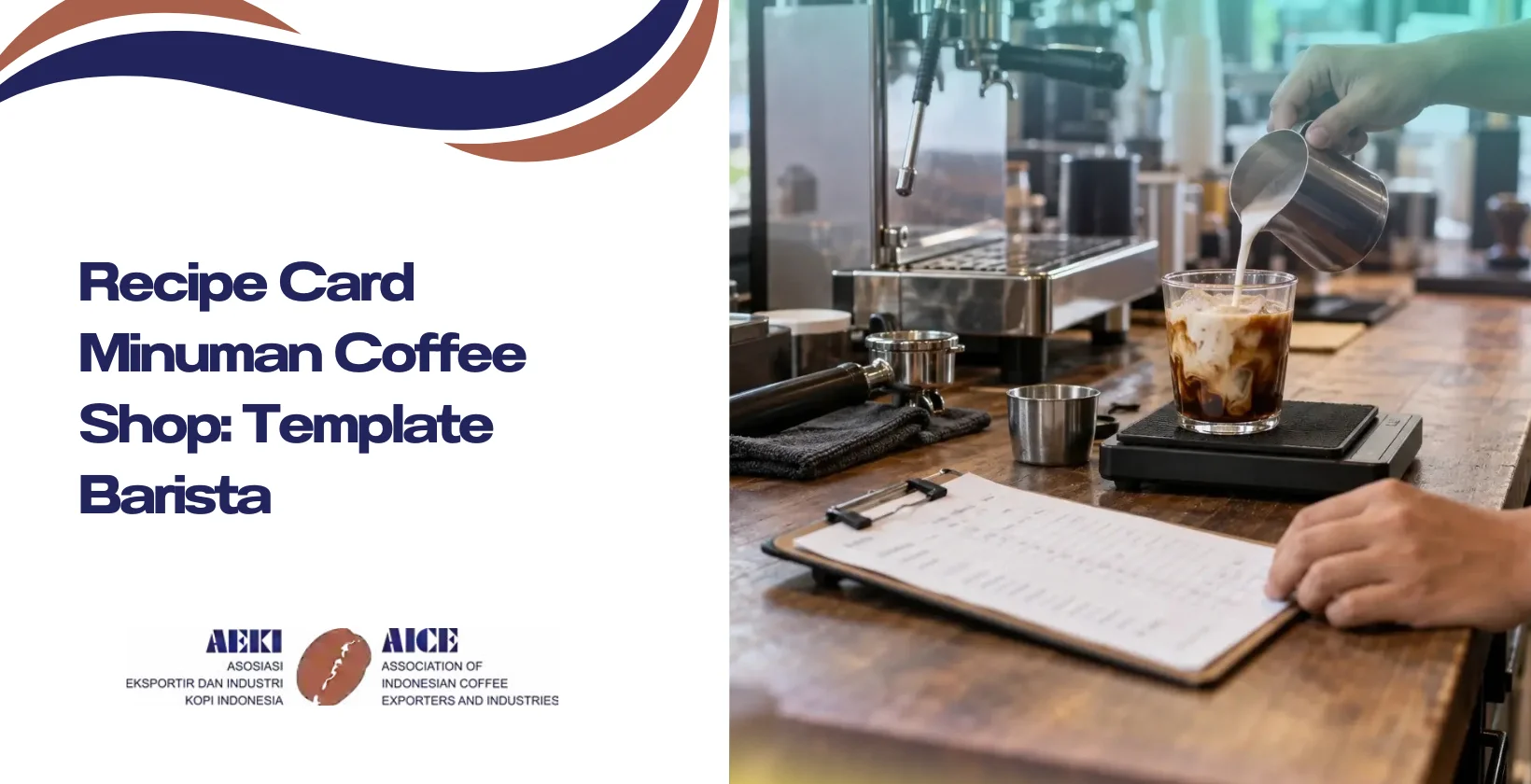


Barista-ready drink recipe cards should include ingredients and measurements, the order in which they're prepared, the expected serving size, and the applicable recipe version. Without these details, two people could read the same menu item but make different drinks.
A good card also helps inspectors identify errors before the order is submitted. Here's a template, a sample fill-in, and how to test it with your team.
The function of recipe cards in barista work
A coffee shop's drink recipe card translates the approved menu into work instructions. If the shop is developing a new drink, complete the development and testing of the signature coffee menu first . The recipe card then records the version selected for service, rather than capturing all the experimental concoctions.
When orders come in a rush, the barista doesn't have to guess whether the "cold milk coffee" uses a different glass, milk type, or assembly order than usual. The card is placed in a visible location, while the ticket remains a reference for customer measurements and modifications. Task allocation and ticket status are discussed separately in the barista workflow during busy times.
The term "standard drink recipe" doesn't mean every establishment must use the same measurements. "Standard" here means the recipe has been tested and approved for the menu, ingredients, and equipment used by that establishment . The Institute of Child Nutrition's standard recipe preparation guide also places the name, ingredients, quantities, and preparation instructions as essential parts of the written recipe. This resource is intended for other food services; the format has been adapted for coffee drinks.
Columns that the team needs to agree on
Start with the recipe card template below. One card should refer to a single, clear variant, such as small and cold. Hot variants or different sizes can be placed on separate cards so the barista doesn't have to choose between multiple numbers when placing an order.
| Card section | What must be filled in |
|---|---|
| Identity | Menu name according to sales list, code if any, size, hot/cold, version number, expiry date |
| material | The specific name of the material, quantity, units, and alternatives. has been approved if available |
| Coffee components | Dry coffee dosage and target espresso yield; refer to applicable work specifications |
| Step | The sequence of preparing components, assembling, and serving drinks |
| Serving results | Type of glass, fill limit or display reference, and things to check before handover |
| vital Records | Relevant material information for customer inquiries, modifications that need confirmation |
| Validation | Names of testers, approvers, and storage location of the active version |
Write "20 ml palm sugar syrup" instead of "two pumps," unless the volume per pump has been specified and verified for the equipment used. Also, state whether the milk number represents the actual amount poured or the approximate amount of milk visible after the drink is finished. The two numbers can differ when ice and foam are present.
Ingredient records should be checked when a product's brand or composition changes. The Food Standards Agency's allergen information guide emphasizes keeping written ingredient information up-to-date when recipes change. This is a reference to UK communication practices and should not replace the regulations and procedures applicable in Indonesia.
Separating the measurement of ingredients and the final result
Don't write "18g espresso" if you mean 18g of ground coffee for extraction . Separate the dry coffee dose from the espresso mass that goes into the drink . The Specialty Coffee Association's discussion of espresso yield measurements indicates that the brewed mass is a separate measurement from the dose. The article describes varying practices, so the figures are not a mandatory ratio for every shop.
Likewise, the words "12 oz glass" indicate the size of the container, not that the liquid poured must be 12 oz. Ice takes up space, while the ingredients on the card can be stated in grams or milliliters. Determine the serving size by the glass used, the fill line or reference photo, and a visual inspection by the barista.
Example of filling out a recipe card
Here's a simulation example for a single menu idea . All numbers must be tested with ingredients, glassware, and equipment in the shop before being used as an operational recipe.
| Column | Example content |
|---|---|
| Name and variants | Iced Coffee Milk A — cold, 12 oz glass |
| Code and version | EKS-A-12; version 1.0; effective upon approval |
| Results | One glass according to the internal photo example |
| Coffee | Dry coffee dose 18 g; target espresso used 36 g |
| Other ingredients | 20 ml palm sugar syrup; 140 ml milk; 110 g ice |
| Alat | Scales, measuring cups, 12 oz serving cups, stirring spoons |
| Order | Pour in the syrup; add the milk and stir until smooth; add the ice; pour in the espresso; check the results. |
| Final inspection | Ticket and milk type match; syrup mixed; glass and lid match; appearance compared to reference photo |
| Ingredients notes | Contains milk in the sample recipe. Changes to milk type must follow the store's confirmation procedure. |
| Approval | To be filled in after the test: name of tester, approver, date |
Note that 18g of coffee is not 18g of espresso liquid. The 36g figure is the target result for this simulation, not a universal number. This target should follow the espresso recipe the team has decided on; the drink card only lists the components used to assemble a single shot.
This template can be copied for other menus, but don't just rename the menu and keep the old steps. Hot drinks, for example, may require different order, containers, and inspection criteria. Reference photos are useful for visualization, but they cannot replace ingredient numbers and written instructions.
Testing readability with two baristas
Before serving, give the same card to two baristas. Have each barista make a drink separately without verbal explanation from the recipe writer. Note any questions they may have, any ingredients they measure differently, and any steps they interpret differently.
For example, the first barista asks, "Is this 140 ml of milk before or after adding ice?" The second barista immediately pours until the glass appears full. The problem lies in the unclear instructions; add "measure 140 ml of milk before pouring," and then test again. Compare the results to the agreed-upon benchmark, including appearance and taste, without assuming one trial is enough to prove consistency forever.
Also, test whether the cards are still easy to read when one person is mixing and another is checking. If your team needs to strengthen their espresso, milk, and workflow skills, check out AEKI's barista learning materials . The program page outlines available bar practices; don't assume recipe card creation is a specific module if it's not listed there.
How to record revisions and replace old versions
Designate a single document owner. Baristas may propose changes when ingredients change or results are inconsistent, but the new version becomes effective after testing and approval. Record what changed, why, who approved it, and when it became effective . For example: “v1.1 — syrup type changed; dosage and ingredient information reviewed; approved October 7.”
Remove old printed cards from the bar and update the digital copies in a location your team regularly accesses. Keep the previous version to track previous orders or findings, clearly marking it as no longer active. If the changes involve ingredients or equipment that come into contact with drinks, also review the information provided to customers. Don't leave two versions that both appear to be "valid."
Conclusion
Drink recipe cards promote consistency when the ingredient list, work order, and serving size are written as three separate items. Fill the card with a tested recipe, test it with two baristas, and then version control it if changes are made. A concise and legible template will be more useful than a lengthy document that doesn't get reviewed at the bar.
If the card test shows the team is still interpreting the work steps differently, practical training may be the next step. AEKI provides information about bar skills on its program page. Check out our coffee training options to determine which program best suits your team's needs.
FAQ
1. What is the difference between a drink recipe card and a barista SOP?
A recipe card explains how to make a specific drink . SOPs regulate broader tasks or decisions, such as service flow, cleanliness, and division of responsibilities.
2. Can hot and cold menus be used on one card?
Yes, if all the different numbers, tools, and steps are clearly visible. If the clerk has to move between columns to understand a single order, two separate cards are usually easier to use.
3. Is a 12 oz glass the same size as the liquid volume in the recipe?
No. That's the nominal size of the container. The ice, foam, and space left at the top of the glass affect the amount of liquid that goes in.
4. What if the espresso target changes after the daily adjustment?
Follow the shop's rules regarding parameters that can be adjusted. If the changes alter the espresso components specified for the menu, communicate this to the team and review the card before assuming the old version is still appropriate.
5. Can a barista change the brand of syrup or milk without updating the card?
Don't assume they're equivalent. Check the taste, measurements, ingredients, and any information you need to convey to customers. Use substitutes only after they've been approved according to store procedures.


